Go to Blogger edit html and find these sentences.Now replace these sentences with your own descriptions.This theme is Bloggerized by Lasantha Bandara - Premiumbloggertemplates.com.
Go to Blogger edit html and find these sentences.Now replace these sentences with your own descriptions.This theme is Bloggerized by Lasantha Bandara - Premiumbloggertemplates.com.
Go to Blogger edit html and find these sentences.Now replace these sentences with your own descriptions.This theme is Bloggerized by Lasantha Bandara - Premiumbloggertemplates.com.
Go to Blogger edit html and find these sentences.Now replace these sentences with your own descriptions.This theme is Bloggerized by Lasantha Bandara - Premiumbloggertemplates.com.
Go to Blogger edit html and find these sentences.Now replace these sentences with your own descriptions.This theme is Bloggerized by Lasantha Bandara - Premiumbloggertemplates.com.
Kim Kardashian West's birthday getaway helped people to "pay their bills" amid the coronavirus pandemic.
Khloe Kardashian recently jetted off to Tahiti to celebrate Kim's 40th birthday alongside her friends and family, and the 36-year-old beauty has rebuffed the idea that their glamorous snaps on social media are proof that the family is out of touch.
Responding to the controversy, Khloe - who was also joined on the tropical getaway by Kourtney Kardashian and Kendall Jenner - said: "I haven't heard a lot about it, but I did hear that people were upset that we all went out of town. I don't really know the extent of it.
"But this year is a frustrating year. I get it. I think there's so many frustrations going on for everybody. But also it's her 40th. This is something that she wanted to do for us. It was such a nice thing."
Khloe - who was previously diagnosed with coronavirus - also dismissed suggestions that they weren't taking the necessary safety precautions.
She told 'The Ellen DeGeneres Show': "Being there with all the precautions that we took and being there and how grateful everyone was for the tourism aspect of it.
"So many people said that we were their first party of guests that they've had in months and what it's done for them to be able to pay their bills or to be able to do stuff for their family, just hearing those messages when we were there, we felt really good and we felt so safe. We did it in the safest way I could imagine someone doing it."
Khloe hopes the controversy doesn't ruin Kim's memory of her birthday.
She said: "It was such a beautiful experience and I want Kim to focus on just how beautiful it was and what she did for everybody. I don't want that to overshadow all the greatness."
The Lying Life of Adults BY ELENA FERRANTE, TRANSLATED BY ANN GOLDSTEIN EUROPA EDITIONS
“To tolerate existence, we lie, and we lie above all to ourselves,” Elena Ferrante observed in a 2002 interview. “Falsehoods protect us, mitigate suffering, allow us to avoid the terrifying moment of serious reflection, they dilute the horrors of our time, they even save us from ourselves.” For Ferrante, the falsehoods that people tell one another and themselves in everyday life—I am happy; I love my wife; I didn’t know what I was doing—are “lovely tales,” or “petty lies.” At moments when guilt and shame threaten our conscience, when they shake our deepest beliefs about who we are, petty lies stop us from looking too closely at ourselves.
Literary fiction is also a lie, according to Ferrante, but a lie that is “made purposely to always tell the truth.” The lies that fiction tells—once upon a time a person said and did this and that—are unmotivated by self-interest. Fiction is an illusion that tinkers with our sense of reality to lay bare the price we pay for our petty lies: Fiction shows us that narcissism and self-doubt impel us to hurt others; that we are quick to betray people who trust us; that love can be more destructive than hate. Central to Ferrante’s theory of fiction as an act of truth-telling is her conviction that the truth dawns more radiantly when glimpsed through the veil of fiction’s lies.
What can we learn about the conjunction of life and fiction from a work of fiction about lying? Ferrante’s exquisitely moody new novel, The Lying Life of Adults, is about a teenager named Giovanna who learns that the grown-ups in her life have been lying to her. She also learns that the contents of their lies are less intriguing than their styles of lying—exaggeration, omission, justification, obfuscation—which vary in their skillfulness, and in the pleasure and pain they afford. All lie differently from The Lying Life of Adults itself, which invites us to evaluate lying not only as a moral problem, but also as an aesthetic challenge—to ask whether a lie can ever be elevated into an art form.
We might ask this question of all of Ferrante’s writing. Her fiction teems with liars of every age, from the insecure children of her beloved Neapolitan quartet, to the anguished adults of her early novels, to Elena Ferrante herself, an authorial persona who claims that she resorts to lying to shield herself. Unlike the Neapolitan quartet, which spans more than half a century in the lives of two friends, The Lying Life of Adults concerns itself with adolescence—a time when deception and self-deception loom large, and growing up means learning to catch oneself and others in the act of lying. Everything that entails—ridding oneself of childish illusions, recognizing the hypocrisy of adults, suffering romantic disappointment—is standard fare for novels of adolescence. But for Ferrante, whose novel bestows on familiar experiences an ardent, unreal shimmer, growing up also involves learning how to cultivate a talent for deception that approaches a talent for writing fiction.
The quartet began with intensity, in a violent, working-class neighborhood of Naples, but The Lying Life of Adults opens amid the educated, affluent, and peaceable. Giovanna’s father is a teacher at a prestigious high school and an aspiring Marxist intellectual, “an unfailingly courteous man” whose love and admiration she desperately desires. Her mother teaches Greek and Latin and proofreads romance novels. Giovanna’s best friends, pretty Angela and poetic Ida, are the daughters of her parents’ best friends, the wealthy Mariano and Costanza. All seem content in their bourgeois happiness—until the day Giovanna, then 12, overhears a conversation between her mother and father.
Giovanna recalls the conversation from an unspecified present: “Two years before leaving home my father said to my mother that I was very ugly.” We have no reason to doubt her account. “Those words,” she tells us, “remained fixed” in her mind as a cruel judgment on her pubescent body and poor performance in school. But we soon discover that what her father actually said was worse: She was “becoming like his sister,” her estranged Aunt Vittoria, “a childhood bogeyman, a lean, demonic silhouette,” whose vulgarity and cruelty her noble father has detested for as long as Giovanna can remember.
Reversing the quartet’s story of upward mobility, Giovanna descends from her home atop Naples’s highest hill to the industrial neighborhood where Vittoria lives, determined to discover the truth of her aunt’s estrangement. Her father begs her “to put wax in [her] ears like Odysseus.” But Giovanna listens as Vittoria tells the agonizing story of her love for a married man named Enzo, their affair exposed by Giovanna’s father, no longer a heroic man but a puritanical, petty bourgeois opportunist. Vittoria describes the sublime feeling of “fucking,” “an adherence to pleasure so desperately carnal” that Giovanna finds herself shockingly aroused. “Tell your father: Vittoria said that if I don’t fuck the way she fucked with Enzo, it’s pointless for me to live,” her aunt demands. We know Vittoria’s pronouncement is a lie, but Giovanna is too overwhelmed by the pleasure the lie elicits to see it. The moralizing lies of her father and the eroticizing lies of her aunt loom before her like Scylla and Charybdis. To navigate between them safely, she must cultivate her own style of deception.
For ferrante, lies, like literature, cleave to different genres, each with its own conventions of language. To her parents, Giovanna downplays her fascination with Vittoria, clipping her descriptions of her visit. To Vittoria, whom she starts to see regularly, she begins “almost inadvertently to invent” things about her parents, though she restrains herself from being too “novelistic.” To Angela and Ida, she lies about Vittoria recklessly, almost giving her “the capacity to fly through night skies or invent magic potions.” The quartet allowed its narrator, a writer named Lenù, to move among several different genres of storytelling: the fable, the romance, the realist novel. The Lying Life of Adults makes the same imaginative experiment available to readers. “I’m not wise, but I read a lot of novels,” Giovanna says of her education in lying. “Instead of my own words, phrases from books come to mind.”
The books she begins with are the epics her father loves to quote. Then her lies start to toggle between fable and romance, with their enchanted objects (she imagines a bracelet Vittoria gives her as possessing magic) and fairy-tale archetypes (she casts Vittoria as an evil witch). Yet the more Giovanna lies, the more she flexes her nascent powers of perception and narration. Her inner world, her imagination, grows critical, rebellious, and she starts to see the “well-ordered world” of her parents with unnerving clarity. She discovers that a more melodramatic configuration of lies (reminiscent of the quartet’s later books) has corrupted her family’s happiness. There is her intellectualizing father’s long affair with Costanza, which he justifies artlessly, in “a frenzy to redeem himself by listing his grand reasons, his pain and suffering.” There is her mother’s improvisation of “nostalgic little speeches” about her estranged husband’s goodness, honesty, and fidelity.
Giovanna deems these lies “offensive,” and is as repelled by their self-serving sentimentality as she is, eventually, by Vittoria’s romantic vulgarity. Part of learning how to lie, Ferrante suggests, is learning how to judge lies based on their aesthetic merits. As we grow up, some varieties of lying must be cast aside: We know too much to accommodate their obvious falsity, their clichés, their failure to reconcile us to the intractable realities of life. What makes the adults seem so stunted is that none of them lies with elegance or verve, with imagination or originality. As non-novelists—teachers of the classics, proofreaders of romance—their lies borrow tropes from the fiction they produce and consume: romantic idealization, passivity in the face of passion, a feeling of fatedness. Yet, as Giovanna soon realizes, the lies designed by their literary culture are too reductive to give meaning to her quest to understand her sudden alienation from her life.
The lying life of adults is not an epic, a fable, or a romance like the novels Giovanna’s mother proofreads. It is not a bildungsroman or Künstlerroman in the way the quartet is. It is a novel of disillusionment, as the literary critic Georg Lukács once described the category: a novel that strips away its young protagonist’s major social relationships to elevate her interiority to “the status of a completely independent world.” From its origins in Balzac’s Lost Illusions and Flaubert’s Sentimental Education, the genre explores an individual’s struggle to adapt private fantasies and illusions to an outer world hostile to them. The word Ferrante uses to describe this feeling of discordance is estraneità: “extraneousness,” “noninvolvement,” or, as Ann Goldstein beautifully translates it, “estrangement.” When Giovanna embraces her father, but draws no comfort from his familiar scent, she is overwhelmed by “a sense of estrangement that provoked suffering mixed incongruously with satisfaction”—suffering from the rupture with her family, from the loss of a shared world; and satisfaction at how her distance allows her to see her parents and aunt anew, her outer gaze clarified by her inner state of homelessness.
The novel’s second half shows how estrangement might allow Giovanna to approach, blindly, haltingly, more elevated forms of lying than what her parents have offered. The catalyst is Roberto, a classic Ferrante love interest. He is a brilliant scholar of religion, a Neapolitan boy who has found success as a young man in Milan but remains attached to his origins; he is engaged to an attractive, if insipid, girl from Vittoria’s neighborhood. When she meets Roberto, Giovanna, now almost 15, tells him she is reading a book about “the search for lost time,” and he praises her intellect. She tells herself the lie that comes fluently to all teenagers: “Become his friend, only that, and show him that, somewhere inside me, unknown even to myself, I possess the qualities he needs.
A pointedly Proustian story of fantasy and desire unfolds. Call this kind of lie the self-deception of infatuation. It rarely lasts, as Ferrante knows, but as long as it does, it allows Giovanna to live lies that only intensify the desire they seek to suppress. Around Roberto, Giovanna projects an aura of intellectual purity, compassion, and wisdom, and strives to be as good as she believes him to be. His work is about “compunction,” which he describes to her not as moral scrupulousness, but as “a needle that had to pull the thread through the scattered fragments of our existence.” That he will let her down is inevitable—from the moment they meet, we know he will never live up to her illusions. But her infatuation allows her to discover that the compunction of which Roberto speaks is key to what some liars, like some novels, do. They create the appearance of a unified self, smoothing the painful and unassimilable edges out of our histories; they offer a false sense of consolation, which we accept, eager not to look too hard at ourselves.
What kind of novel is best at transforming lying into an art form and fiction into a truthful lie rather than mere consolation? Not the epic, not the romance, and not the Proustian novel, which labors to create a single self out of the fragments of existence. The answer can be found at the very beginning of The Lying Life of Adults, when Giovanna describes the story to come.
I slipped away, and am still slipping away, within these lines that are intended to give me a story, while in fact I am nothing, nothing of my own, nothing that has really begun or really been brought to completion: only a tangled knot, and nobody, not even the one who at this moment is writing, knows if it contains the right thread for a story or is merely a snarled confusion of suffering, without redemption.
Everything the sentence suggests—that the “I” who speaks from within fiction is elusive; that writing is like weaving a fabric that conceals and reveals the life beneath; that this fabric will never redeem life’s suffering—is a description of Ferrante’s own fiction.
The novel alludes to the quartet as it closes, and Giovanna (the reader) and her poetic friend Ida (the writer) leave for Venice together, vowing to become “adults as no one ever had before.” On the one hand, the ending could be read ironically, as a version of the thrillingly cliché adolescent illusion that running away from home will free us from the ties that bind. On the other, the embrace of friendship over family and romance could signal the beginning of a superior and entirely truthful lie: the writing of the novel itself, a collaborative examination of the past by two people—both Giovanna the liar and “the one who at this moment is writing.” Whether the one who is writing is the older Giovanna or her friend Ida, the echo of the intertwined protagonists of the quartet, Lila and Lenù, is clear.
The end of The Lying Life of Adults suggests that the way to reckon with the “snarled confusion of suffering” is literary partnership—that this marvelously disconcerting novel of disillusionment is a product of the grace extended to the liar by the writer. Only the writer’s truthful lies can mirror the liar’s petty ones with the clear sight needed to affirm the intensity of her past. Only the writer knows how to conjure desire; sympathize with misjudgment; rebuke carelessness; disappoint mercifully. Always, Ferrante’s fiction reminds us that sometimes you need someone else to help gather the scattered fragments of your existence. A writer is a friend who can find the thread of your story when you are too blinded by your lies to grasp it yourself. She can give you the beginning and end you need—if not in life, then in fiction.
(Reuters) - Canadian e-commerce firm Shopify Inc beat Wall Street estimates for third-quarter revenue on Thursday, as more brick-and-mortar businesses listed on its platform to tap the pandemic-driven surge in online shopping.
U.S.-listed shares of Shopify rose 5% before the bell.
Boom in online orders from consumers sheltering at home during the outbreak boosted sales across e-commerce firms, encouraging small- to medium-sized businesses to create an online presence.
Shopify generates revenue by selling subscription to merchants looking to join its e-commerce platform and by charging them payment processing and transaction fees along with other paid logistics services.
The Canadian company's gross merchandise volume (GMV), a metric used in the e-commerce sector to measure transaction volumes, surged 109% to $30.9 billion in the quarter, the highest since its IPO in 2015.
Revenue, for the quarter ended Sept. 30, came in at $767.4 million, a 96% surge on-year, and above analysts' estimate of $663.4 million, according to IBES data from Refinitiv.
(Reporting by Ayanti Bera and Tiyashi Datta in Bengaluru, Editing by Sherry Jacob-Phillips)
The new Megadap MTZ11 autofocus adapter for Leica M-mount lenses on Nikon Z cameras is now in stock at Amazon and eBay (this adapter will let you autofocus Leica M-mount lenses on Nikon Z mirrorless cameras). I reported on the Techart version (TZM-01) of this adapter last week.
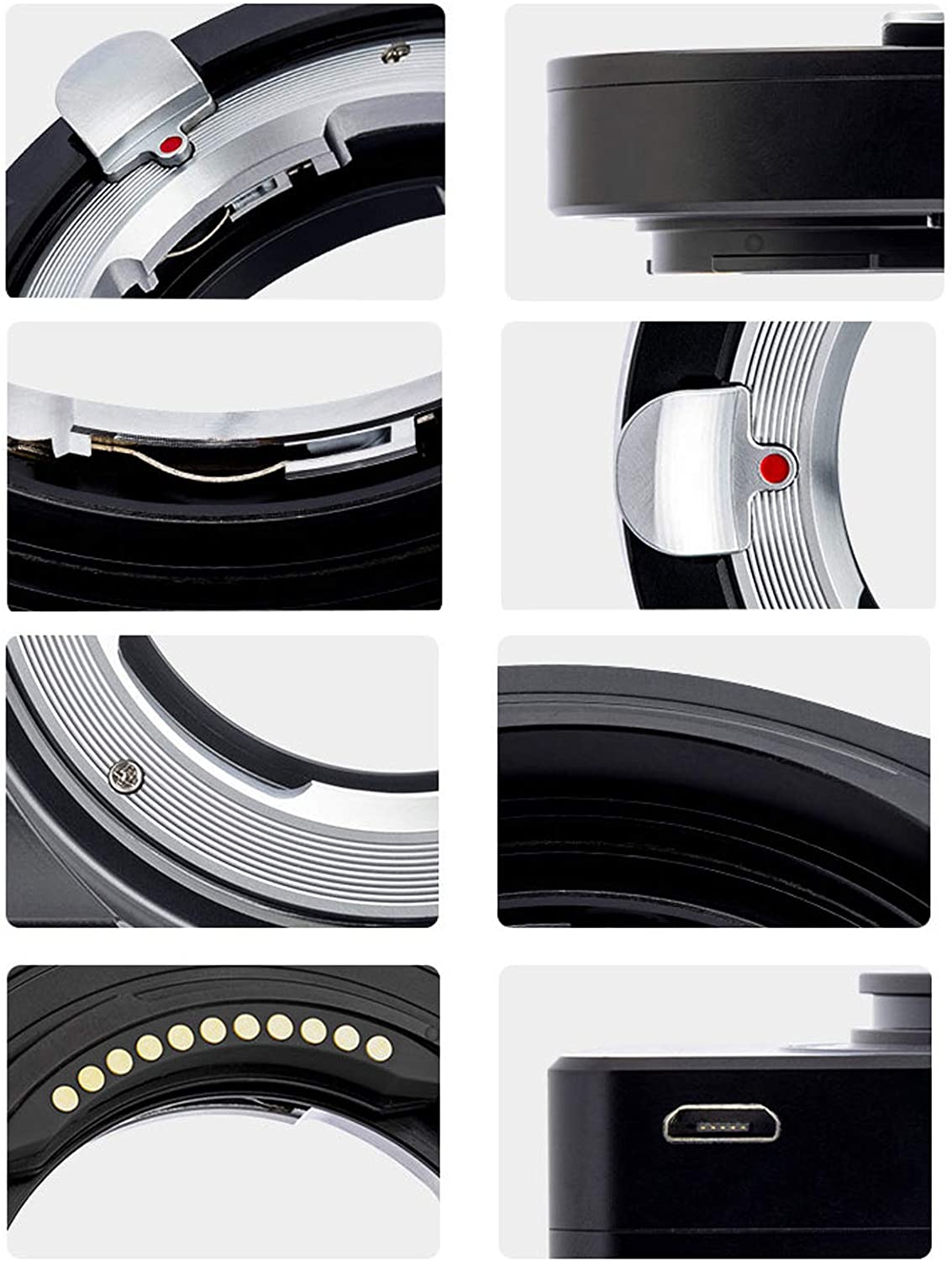
Megadap MTZ11 technical specifications and additional pictures:
Compatible lens: Leica M/Vorenda VM/Zeiss ZM and other M mount lenses
Material: shell: aluminum alloy; front bayonet: copper
External coating: silver for pearl nickel plating/black for hard oxidation process
Autofocus: It has excellent focusing performance in single focusing AF-S, and it can also be used in shooting AF-C and video tracking AF-F.
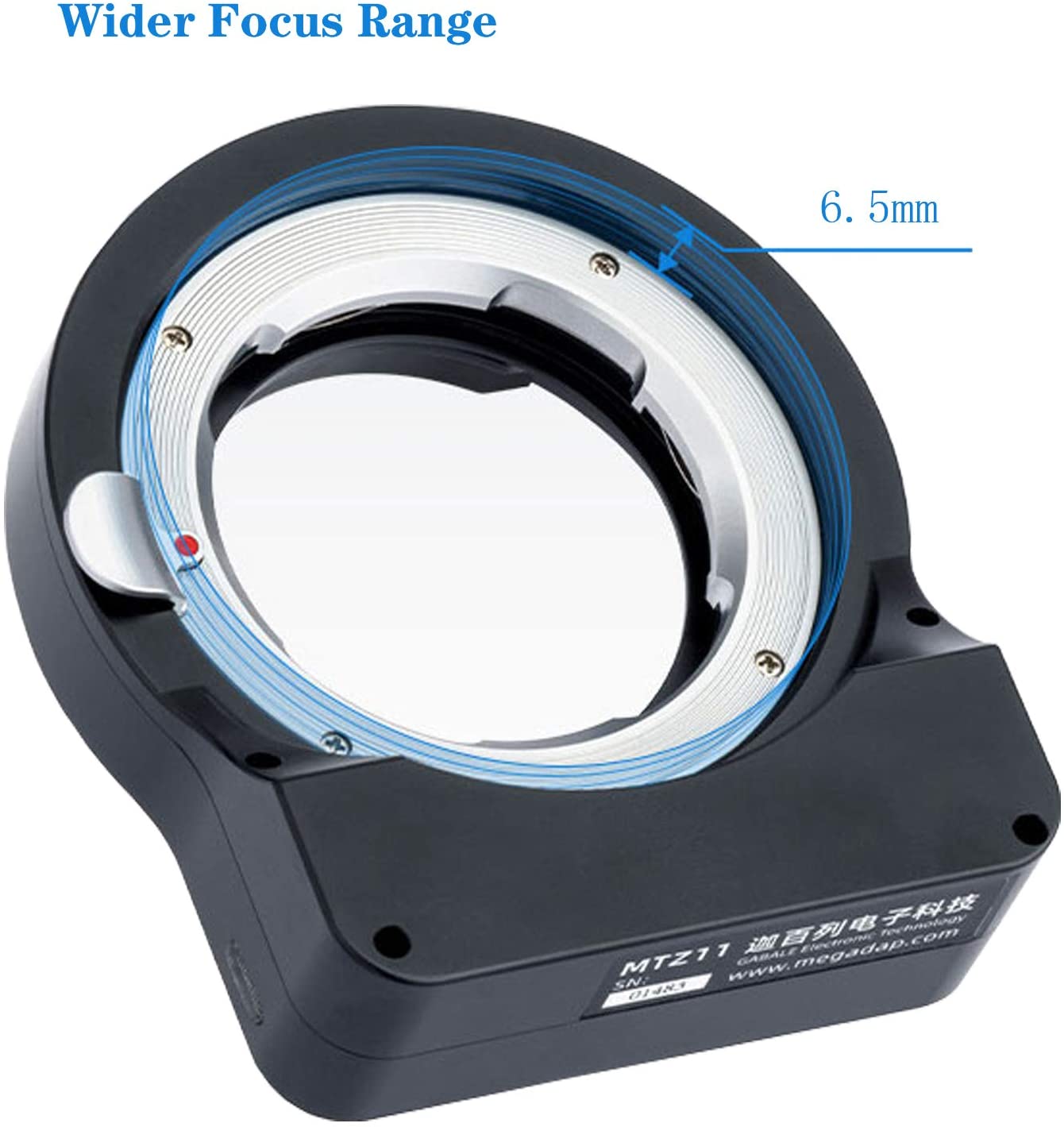
Wider focus range: The adapter’s focus stroke is 6.5mm, which is longer than the original focus stroke with the lens to achieve a wider focus distance. Some lenses can shoot macro scenes.
Better corner effect: no edge collapse or redshift when shooting with a rangefinder lens.
Wide compatibility: support Leica M/Vorenda VM/Zeiss ZM and other M mount lenses.
iPhone 12 models could have an inactive wireless charging feature for accessories, according to an FCC filing discovered by VentureBeat's Jeremy Horwitz.
In the filing, Apple said that 2020 iPhones support a wireless charging function that will seemingly be enabled for at least one future Apple accessory:
In addition to being able to be charged by a desktop WPT charger (puck), 2020 iPhones also support WPT charging function at 360 kHz to charge accessories. Currently the only accessory that can be charged by iPhones is an external potential apple accessory in future.
Bloomberg's Mark Gurman speculated that one of these accessories could be new AirPods with MagSafe support, which could allow the AirPods case to magnetically attach and charge on the back of iPhone 12 models. It would also be reasonable if Apple's long-awaited AirTags item trackers were able to be charged on the back of an iPhone 12.
Two-way charging was a feature rumored for the iPhone 11 lineup in 2019, but Apple analyst Ming-Chi Kuo later said the feature was possibly abandoned because "the charging efficiency may not meet Apple's requirements."
On October 14 I told you the 16mm f/1.8 lens will be announced in early 2021. A new source gave me some additional info:
The new GM lens that is ready (as you guessed correctly) and was planned to be announced “by surprise” on November 4th has indeed been moved to “early” 2021 due to production issues (production isn’t up to speed and can’t keep up). On November 17th there will be the official presentation of FX6 and sadly enough that will be it for 2020. Next year will be more exciting.
Of this new source is right on the FX6 launch date than we know the 16mm lens launch was indeed delayed due these issues.
For many of us, grocery shopping is when we will come into contact with the highest number of people during the pandemic. The more people we encounter, the higher the risk of virus transmission. So, how do we keep safe when going to the shops?
To become infected, a person needs to be exposed to a certain number of virus particles, but we do not yet know exactly what this number is for SARS-CoV-2, the virus that causes COVID-19. You can be exposed to the virus by breathing it in, or by touching something with viral particles on it, and transferring it to your mouth, nose, or eyes.
When an infected person coughs, they produce lots of droplets which range in size. Bigger droplets will settle onto surfaces more quickly because of their higher mass. However, smaller droplets will be transported further away from the infected person because their lower mass makes them more easily carried by air currents. The bigger drops carry more virus particles. And the more virus particles you are exposed to, the more likely you are to become infected. This is where the two-metre rule for social distancing comes from: the bigger droplets should not travel beyond two metres.
The bigger droplets will settle onto surfaces and people infected with COVID-19 may contaminate surfaces with the virus by touching them. The coronavirus can also survive on different materials for some time. It can survive for one day on cardboard and three days on plastic and stainless steel.
But the virus is relatively easy to kill. Detergents, alcohol, bleach, and some disinfectants have all been shown to be effective at inactivating coronaviruses.
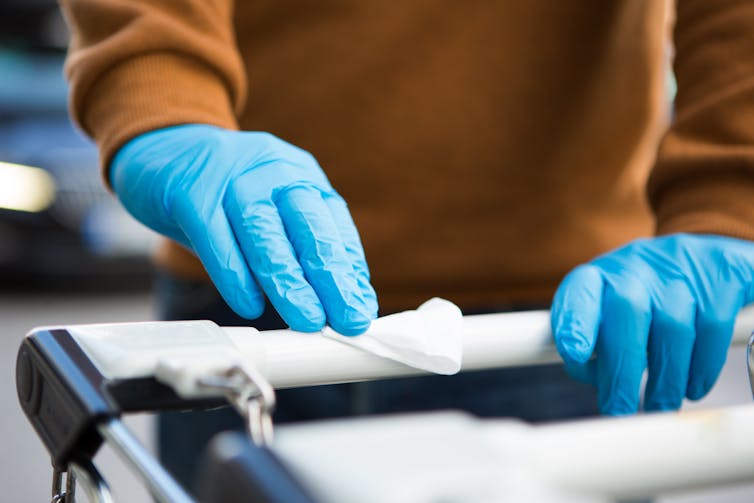
The surfaces most likely to have the virus on them are those that are touched frequently by lots of people. In a shop, areas such as the trolley and basket handles, the chip and pin machine, or at the self-checkout, are likely to have the highest number of virus particles.
But there are still many ways to keep yourself safe during – and after – your shopping trip.
Stay home if you can
Plan ahead so you don’t have to go to the shops often – and opt for home delivery if possible. If using them, put on your mask or gloves before you go into the store. Use surface cleaning wipes if you brought them, or use those provided in the shop to wipe the trolley or basket handle before you touch it. When queuing, keep a distance of two metres from other people.
Try to touch as few things as possible and do not linger for too long in the aisles – especially busy ones. Maintain your distance from others and do not touch your face. It’s fine to ask for help if you need it but try to avoid contact with other people as much as possible.
Keep contact to a minimum
Tills and self-checkouts will both have had lots of people touching them, so these are virus hotspots to avoid. Use contactless payment with a card or phone as much as possible so you don’t have to touch the card machine’s keypad.
Clean your hands
Once you have checked out and left the shop, remove your gloves and dispose of them if you were wearing them. Otherwise, you can wash your hands in the shop toilets or use hand sanitiser with between 60-95% alcohol. Then you can load the shopping in the car and head home.
When you get home, you should give your hands a wash before you unpack the shopping. You can remove outer packaging from some products and dispose of it, though it’s unlikely that the surface of any products will be covered with enough virus to cause an infection.
Put everything away into the fridge, freezer or cupboards and then wash your hands again. If you used your own bags, put these somewhere out of the way ready for the next trip. If you used your phone while out shopping, give it a clean as well.
Food preparation
Freezing and cooking should inactivate the virus, although there is currently no evidence that COVID-19 can be transmitted via food in particular. As always, use good food hygiene and make sure you cook everything as directed. Make sure you wash fresh fruit and vegetables thoroughly with water, especially if you will be eating them raw.
Understanding how the virus is transmitted allows us to know what level of risk we are likely to be exposed to during our daily lives under lockdown. It’s important to think things through in advance, weighing up the risks and benefits so you can make the best choices and keep yourself and everyone else safe.